News update: this post was researched and drafted automatically from the sources listed at the end, and published without a human edit. If you spot a mistake, write to me and I will fix it.
Meta and Apple, normally competitors, shipped Muse Spark Open together this week. The model is an open weight mixture of experts system with 816 billion parameters and a 1 million token context window. Meta calls it the most capable open weight model in the United States. Hugging Face describes it as coding optimised and natively multimodal, with image, video, and audio input.
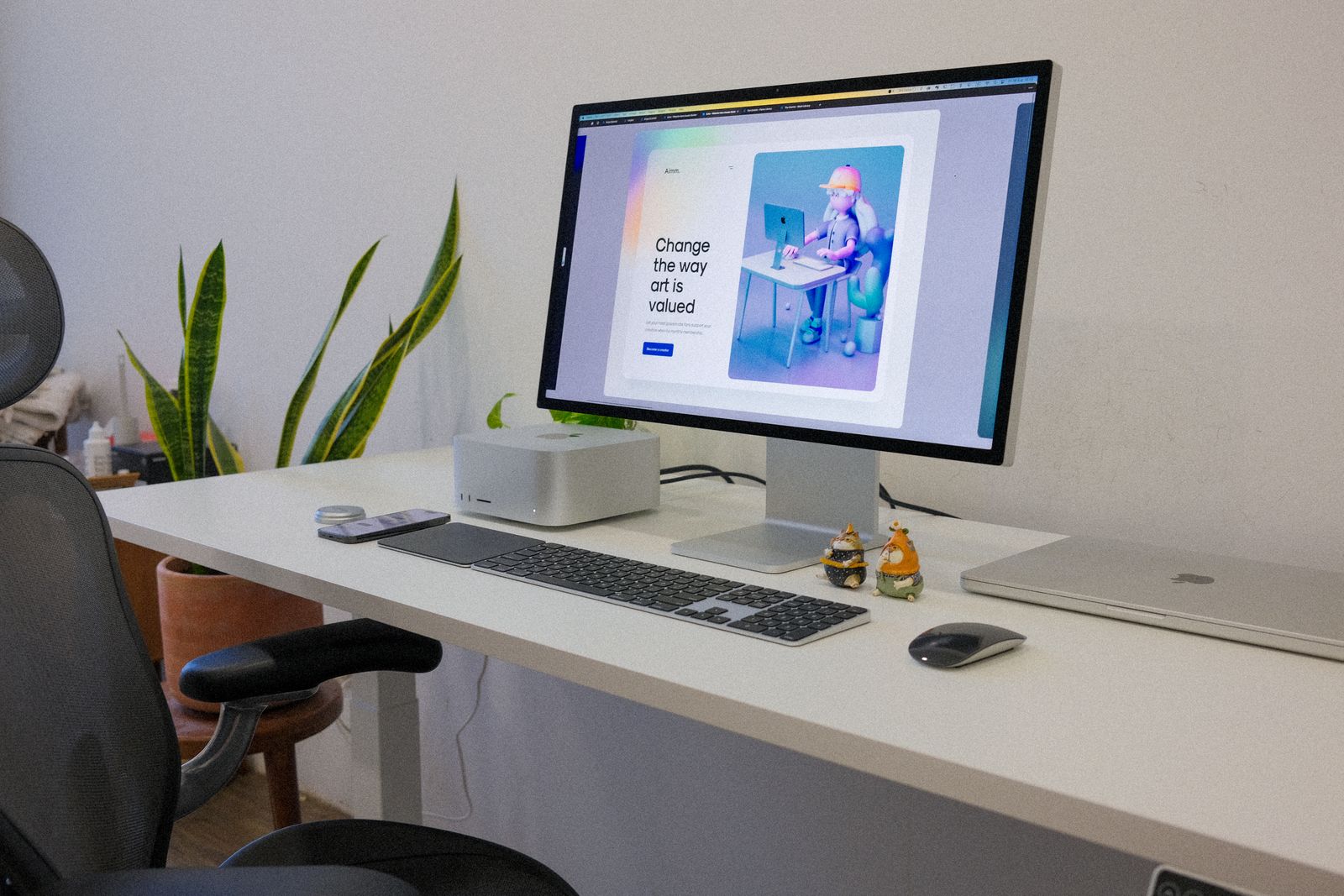
What makes this launch different from a large GPU cluster model is the Apple work. The Verge reports that Muse Spark Open is the first model in its class that can run on your desktop using two Apple M5 Ultra Mac Studios with the MLX framework. That is a lot of hardware, but it puts a frontier scale model within reach of a well equipped studio rather than a data centre.
In one line: Meta and Apple released Muse Spark Open, an open weight 816B parameter multimodal mixture of experts model optimised for agentic coding and local Mac use, with a 1 million token context window.
What the model is
Hugging Face says Muse Spark Open is a mixture of experts model at a much larger scale than Muse Glimmer, which Meta released in August as a small dense model. The language model has 62 layers, a hidden dimension of 8192, and grouped-query attention. Each layer uses a mixture of experts block with 256 experts. A router selects 8 experts for each token. Each expert projects from 8192 to 4096 dimensions and back. The experts hold about 97 percent of total parameters. Only 8 experts run per token, so the model computes each token with about 42 billion parameters, but all 256 experts stay in memory. This means deployment needs the memory of an 816 billion parameter model but runs at the speed of a 42 billion parameter model.
- Native multimodal input: text, images, video, and audio.
- 1 million token context window at inference.
- BF16 checkpoint about 1.5 TB in safetensors format.
- NVFP4 checkpoint stores parameters in 4 bit precision for NVIDIA Blackwell GPUs.
- Inference recipes for transformers, llama.cpp, vLLM, and SGLang.
Why Apple's involvement matters
The Verge reports that Meta and Apple worked together on the launch and are publicly supporting each other. Mark Zuckerberg said on X that Muse Spark Open runs great on new Mac Studios thanks to work with John Ternus and Apple. John Ternus, Apple's new CEO, replied that it is amazing to run a model of this caliber and scale efficiently from your desk. Meta's chief AI officer, Alexandr Wang, told Axios that the companies have been collaborating over several months. TechCrunch reports that the model needs at least 1 TB of RAM, citing Engadget, and runs best via a Mac Studio with the M5 Ultra chip. Apple also published a technical post about MLX, its array framework for machine learning on Apple silicon, covering Muse Spark Open and two other open models. TechCrunch notes that open weight models can be significantly more cost efficient and can offer transparency and flexibility that closed models do not.
What Meta built it for
Hugging Face says Meta trained Muse Spark Open for agentic coding. That means reading a codebase, writing and debugging code, and calling tools. The same model can read a screenshot, listen to a voice note, or watch a screen recording while it works on your code. Meta describes it as planning, acting, observing, and self-correcting over long tasks, including browsing the web with images. TechCrunch reports that Meta paired the model with Muse Code, its AI coding terminal, and deployed it to agentic workflows. One example is coding fixes for a Mastodon client that included bug fixes, new features, and a full build. Another example is running DaVinci Resolve, where the model reviewed and cropped footage. The Verge says Meta claims the model excels at long horizon tasks, complex software engineering, and multi-step reasoning. For a delivery team, the useful signal is the focus on long debugging sessions and multi-file refactors, the kind of work that breaks smaller coding assistants.
What to watch before you adopt
This is not a laptop model. The memory requirement alone rules out most client sites. The BF16 weights are about 1.5 TB. The long context is impressive, but the KV cache for a full 1 million token context is about 266 GB in BF16, per Hugging Face. The NVFP4 checkpoint reduces precision for NVIDIA Blackwell GPUs, but that still runs on a single B200 node. On Apple hardware, you need two M5 Ultra Mac Studios with MLX. The practical options are either a very high end local setup or an API. Meta says the model is available through multiple API platforms now.
- BF16 weights are about 1.5 TB.
- Full 1 million token context KV cache is about 266 GB in BF16.
- Local Apple path needs two M5 Ultra Mac Studios with MLX.
- NVIDIA path uses NVFP4 on a single B200 node, per Hugging Face.
What I would try
For our delivery work, I would not plan a client deployment on this yet. The memory and hardware requirements are too high for most regulated client sites. But I would try Muse Spark Open through an API on a long, messy debugging task, preferably one that includes screenshots or a screen recording. If it holds context over a multi-file refactor better than smaller coding models, then we can plan for a high end local setup later. I would also watch Apple's MLX post and the two Mac Studio path, because on-prem AI gets more interesting when the hardware path is defined. For RAG chatbots, there is nothing in these sources that says this model improves retrieval. So nothing to change there yet. Just watch and test the coding agent behaviour.